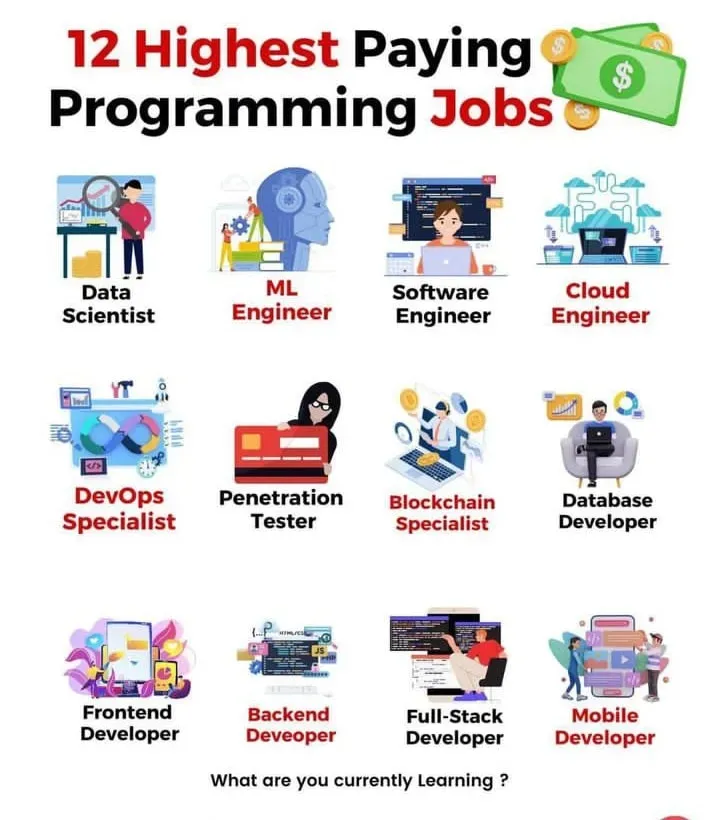
Career in Programming today offers a dynamic path where problem-solving, collaboration, and continual learning drive success, and a strong programming portfolio can showcase that journey across projects, teams, and real-world outcomes. Hiring managers increasingly want tangible evidence beyond resumes, so a well-crafted software developer portfolio acts as a living CV that demonstrates what you can ship, how you collaborate with others, and the real-world impact of your work on users and businesses. With a curated set of coding portfolio ideas, you can display breadth—from open-source contributions to end-to-end apps—that highlights your coding style, your approach to debugging, and your ability to learn new technologies quickly. Structure and readability matter, so a portfolio that lands jobs should present clear case studies, live demos, and accessible project narratives, with concise summaries, visual aids, and a navigation that guides hiring managers to your strongest credentials. In this guide, you’ll learn practical steps to build a compelling portfolio and discover how to land jobs with a portfolio that recruiters notice, including templates, checklists, and strategies for continual improvement.
Viewed through the lens of software craftsmanship, a successful coding career hinges on delivering usable code and communicating it clearly. Think of your work as a living catalog of projects, with open-source contributions, API integrations, and user-facing features that tell your technical story. Concepts like code quality, collaboration, and measurable outcomes translate into the same signals recruiters look for when evaluating candidates. In practice, this translates to an online portfolio, project pages, and documented workflows that complement a resume and make your skills more searchable.
Career in Programming: Building a Portfolio That Lands Jobs
For a Career in Programming, your portfolio is more than a checklist of skills—it’s proof that you can ship code, collaborate with teams, and solve real-world problems. A well-crafted programming portfolio acts as a living CV, showing not only what you know but what you can build and the impact you can deliver. Hiring managers increasingly expect tangible evidence of your abilities, and a strong portfolio helps you stand out in a crowded tech market.
Focus on the building blocks: curate meaningful projects (4-8 is a good range), present each as a case study, and show your process in addition to the product. Include real-world contexts, clear architecture decisions, and measurable results. Use a clean, accessible structure so recruiters can skim quickly, and prioritize projects that demonstrate collaboration and end-to-end delivery. These are the coding portfolio ideas that strengthen a Career in Programming.
Coding Portfolio Ideas to Boost Your Software Developer Portfolio
Begin with portfolio ideas that align with the roles you want. A solid set of coding portfolio ideas might include a public API with authentication, a polished UI, and end-to-end deployment. For a software developer portfolio, show off projects that span backend, frontend, data processing, or automation to demonstrate versatility and readiness to contribute from day one.
To land jobs with a portfolio, prioritize clarity, accessibility, and credibility. Link to GitHub with meaningful READMEs, provide live demos or screencasts, and create project pages with sections for problem, approach, implementation, outcomes, and learnings. If you’re looking for a framework on how to land jobs with a portfolio, keep the pages scannable, emphasize measurable impact, and include demonstrations of end-to-end delivery. The portfolio that lands jobs is achievable when projects are well-documented and easy to explore, read, and reproduce.
Frequently Asked Questions
For a Career in Programming, how can I build a programming portfolio that lands jobs?
A strong programming portfolio acts as a living CV that proves you can ship code and solve real problems, helping you move toward interviews in a Career in Programming. To build one that lands jobs, curate 4–8 substantial projects that show a range of skills, including at least one collaboration and one real-world problem solved. Present each project as a case study with sections for the problem and goal, your approach, implementation highlights, results, and learnings. Show your process, not just the product, by including meaningful code samples, README documentation, architecture diagrams, and live demos. Create a clean, accessible structure with a concise landing page, individual project pages, an About page, and easy ways to contact you or download your resume. Align projects with your target roles (web development, data, mobile, etc.) so recruiters quickly see the fit. Maintain technical hygiene by hosting on a reliable platform, keeping dependencies up to date, and providing quick-start guides. A portfolio that lands jobs demonstrates your thinking and impact, and serves as a powerful catalyst for interview opportunities within your Career in Programming.
What coding portfolio ideas should I consider to strengthen my software developer portfolio and advance my Career in Programming?
Here are coding portfolio ideas to strengthen your software developer portfolio and advance your Career in Programming: 1) Full-stack project with a public API, authentication, and a polished UI to show end-to-end delivery. 2) Data-focused project that processes real datasets, builds visualizations, and documents methodologies. 3) Automation or tooling project that reduces manual tasks, with before/after metrics. 4) Open-source contribution that highlights collaboration and version control practices. 5) A capstone project tied to a domain you care about (health tech, fintech, education, etc.). 6) A mobile app or cross-platform project that showcases usability and performance. For each idea, present as a case study (problem, approach, tech stack, architecture, outcomes, and learnings), include architecture notes and testing strategies, provide a live demo or video walkthrough, and host code on GitHub with clear READMEs. Tailor the portfolio to the roles you want, emphasize end-to-end delivery and maintainability, and ensure the portfolio helps land interviews in your Career in Programming.
| Key Point | Summary |
|---|---|
| Why portfolio matters | A portfolio is a narrative about your skills, learning journey, and problem-solving that goes beyond transcripts; it demonstrates practical coding ability, persistence, and the ability to ship features while showing growth over time. |
| Curate meaningful projects | Select 4–8 substantial projects that showcase a range of skills; include collaboration (open-source or team work); cover real-world problems; add smaller starter projects if you’re just beginning. |
| Present each project as a case study | Make each project scannable: define problem & context, your approach, implementation highlights, results/impact, and learnings. |
| Show your process, not just the product | Include code samples or GitHub links with meaningful commits, architecture diagrams, testing notes, and live demos or screencasts. |
| Create a clean, accessible structure | Build a concise landing page with 3–4 flagship projects, clear project pages, an About page, contact and resume options, and accessible design (readable fonts, alt text, good color contrast). |
| Align portfolio with desired roles | Tailor emphasis to target roles (e.g., web development vs data science) to help recruiters quickly see the strongest fit. |
| Technical hygiene and consistency | Host on a reliable platform, maintain consistent naming and structure, keep dependencies up to date, and include a quick-start guide. |
| Maintenance and growth | Update quarterly with new projects, refresh design and links, and adjust the about section to reflect evolving goals. |
| Common mistakes to avoid | Too many unfinished projects, weak READMEs, overly long pages, and relying on a single project as proof of capability. |
| Positioning for interviews | Use the portfolio as a conversation starter; be ready to discuss architecture, trade-offs, and results, which helps move to interviews. |
Summary
Career in Programming thrives when your portfolio tells a clear story of practical coding ability, collaborative work, and tangible impact. A well-structured portfolio goes beyond listing skills; it demonstrates how you think, how you solve problems, and how you deliver value in real projects. By curating meaningful, well-documented projects and presenting them as concise case studies, you create a compelling narrative that resonates with hiring managers. Ensure accessibility and clean design so recruiters can quickly navigate and understand your strengths. Regular updates show ongoing learning and commitment, reinforcing your suitability for the roles you want in tech. In short, a thoughtful portfolio is your most powerful asset in the competitive Career in Programming landscape.