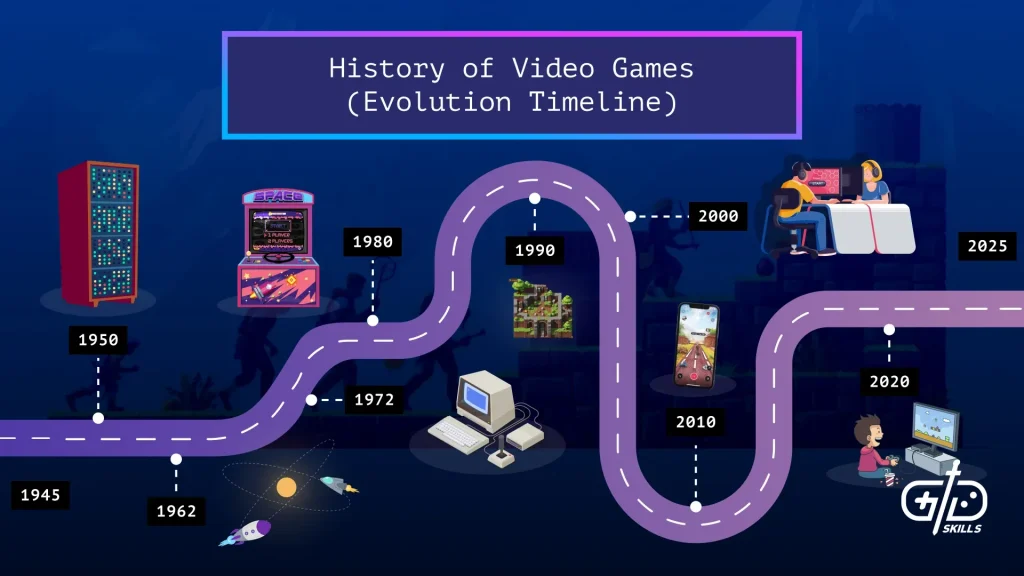
Evolution of Video Games has mirrored human creativity and technological progress, transforming play from simple pixels to expansive, engaging experiences for players across generations and geographies. This journey reflects the history of gaming as engineers, designers, and players reshape hardware, software, and storytelling to surprise and delight audiences through iterative cycles of invention, experimentation, and community feedback. From early pixel art to newer forms of expression, developers learned to convey momentum, character, and depth within tight constraints, using clever art direction, timing, and memorable gameplay loops. The move from monochrome displays to color palettes and responsive controls opened new possibilities for social play and online communities, fueling shared rituals like high-score chases, co-op adventures, and fast-fire online matchmaking. Today, cloud-driven platforms expand how we experience games, inviting exploration, experimentation, and new forms of interaction across devices and moments.
Viewed through the lens of contemporary media, the arc from simple line-based games to interactive entertainment mirrors broader shifts in technology and culture, touching education, art, and community alike. Developers refined 3D graphics and camera systems as console generations advanced, enabling more believable environments and richer storytelling, while accessibility options broaden who can join and participate. Open worlds, procedural generation, and immersive worlds became hallmarks of design, inviting players to shape journeys rather than follow scripted paths, blurring lines between play, exploration, and creation. More recently, virtual reality and spatial interaction have sparked new sensibilities about presence, motion, and embodiment in play, inspiring developers to rethink feedback loops and user interfaces. As platforms multiply and communities grow, the evolving landscape of interactive entertainment emphasizes accessibility, shared experiences, and ongoing collaboration between creators and players across genres, regions, and generations.
Evolution of Video Games: From Pixel Art to Immersive Worlds
In the Pixel Era, the earliest hardware constrained what game visuals could express, turning imagination into vibrant, readable sprites. This period—often remembered through the lens of history of gaming—showed how pixel art could convey momentum, risk, and charm with limited color palettes and memory. Those tiny building blocks shaped a shared language among developers and players, creating iconic characters and moments that still echo in modern retro-inspired titles.
As hardware advanced, the move from 2D to 3D graphics opened new dimensions for storytelling and exploration. The 3D graphics revolution didn’t merely improve visuals; it redefined level design, camera control, and player agency. The Evolution of Video Games during this era celebrated how art direction and computation could meet, allowing open-ended exploration and cinematic experiences that once seemed like science fiction, and giving rise to immersive worlds that invite players to linger in large, believably designed spaces.
The Golden Age of Home Consoles accelerated the shift toward richer social play, online ecosystems, and shared cultural moments. With more powerful hardware and online connectivity, players discovered friends and rivals across couches and continents alike. This evolution nurtured communities and multiplayer formats, reinforcing the idea that immersive worlds extend beyond single-player narratives to collaborative and competitive experiences that define modern gaming.
History of Gaming and the Rise of Virtual Reality: Toward Deeper Immersion
Recent decades have seen immersive technologies push perception beyond traditional screens. Virtual reality (VR) and, to a growing extent, augmented reality (AR) reshape how players inhabit and interact with game spaces, offering a sense of presence rarely achieved in prior eras. The Evolution of Video Games in this context emphasizes embodied play—where players feel connected to actions, environments, and other participants in ways that heighten immersion and realism, all while supporting detailed world-building and spatial storytelling.
Looking ahead, the history of gaming continues to inform design choices as developers embrace cloud gaming, cross-platform play, and modular ecosystems. These trends expand access to immersive worlds and keep players engaged across devices, highlighting how hardware abstractions and software innovations interact to deliver more adaptive difficulty, scalable content, and richer social experiences. In this ongoing journey, virtual reality remains a powerful catalyst for new forms of interaction, inviting designers to blend narrative ambition with procedural systems and AI-driven companions for ever-deeper immersion.
Together, these threads—pixel art foundations, the leap to 3D graphics, and the rise of VR-driven experiences—paint a continuous arc in which technology amplifies imagination. The History of Gaming is not just a chronicle of gadgets but a story of people designing playful spaces that invite curiosity, collaboration, and discovery. As platforms converge and new interfaces emerge, the future of immersive gameplay looks set to blend traditional storytelling with interactive systems that respond to player choice in increasingly nuanced ways.
Frequently Asked Questions
How has the Evolution of Video Games progressed from pixel art to 3D graphics, and why is this shift significant in the history of gaming?
The Evolution of Video Games traces a transition from pixel art and limited memory to full 3D graphics, driven by advancing hardware and evolving design goals. In the early pixel art era, developers used clear silhouettes and concise motion within tight constraints. As processing power grew, 3D graphics enabled richer levels, dynamic cameras, and more expressive storytelling. This leap expanded gameplay beyond flat screens, paving the way for immersive worlds and cinematic experiences while honoring the creativity that marked the history of gaming.
What role do immersive worlds and virtual reality play in the Evolution of Video Games, and how do designers balance accessibility with depth?
Immersive worlds and virtual reality exemplify the current phase of the Evolution of Video Games, offering expansive environments, emergent gameplay, and heightened presence. VR introduces new interaction paradigms, spatial audio, and motion controls, while open-world design and procedural systems support player-driven exploration. To balance accessibility with depth, designers employ scalable content, adjustable difficulty, cross-platform options, and optional VR modes, ensuring players can enjoy rich immersive experiences on diverse devices without compromising performance or inclusivity.
| Topic | Key Points | Notes |
|---|---|---|
| Introduction | Evolution is driven by rapid adaptation, hardware limits, and social aspects of play; it blends creativity with technological progress across generations. | Sets the stage for how games mirror broader cultural and technical change. |
| Pixel Era (8-bit/16-bit) | Pixel art, limited memory, clear silhouettes, and budget constraints shaped communication of momentum, risk, and reward. | Retro aesthetics and fundamentals of recognizable design persist in modern titles. |
| 2D to 3D Shift | Transition to 3D opened new gameplay, storytelling, and immersion; depth cues and perspective reshaped level design and camera systems. | Opened possibilities for open-ended exploration and cinematic experiences. |
| Golden Age of Home Consoles & Online Play | Broader audience via home consoles; online play and social ecosystems emerged; multiplayer expanded to global scales. | Co-op and competitive play helped define community-driven gaming culture. |
| Immersive Worlds | Open worlds, sandbox mechanics, and procedural generation enable expansive, player-driven exploration. | Emergent storytelling thrives alongside carefully designed ecosystems. |
| Immersive Technologies (VR/AR) | VR, AR, spatial interaction, and advanced audio/haptics deepen presence and embodiment in gameplay. | Shifts from screen-based to space-based experiences influence design philosophy. |
| Design Principles & Future | Accessibility, inclusivity, cloud gaming, cross-platform play, and modular ecosystems shape future development. | AI-driven design and community creation broaden participation and customization. |
| Broader Impact (Culture, Economy, Education) | Games influence art, music, storytelling, hardware innovation, and education; industry dynamics drive ongoing evolution. | Educational potential and economic structures continue to evolve with the industry. |
| Conclusion (Summary) | From pixel art to immersive worlds, each era builds on its predecessors through constraints, experimentation, and social connection. | The ongoing Evolution of Video Games promises new interactivity, smarter NPCs, and evolving play communities. |
Summary
Table provides a structured overview of how the Evolution of Video Games has progressed across key eras and themes.