
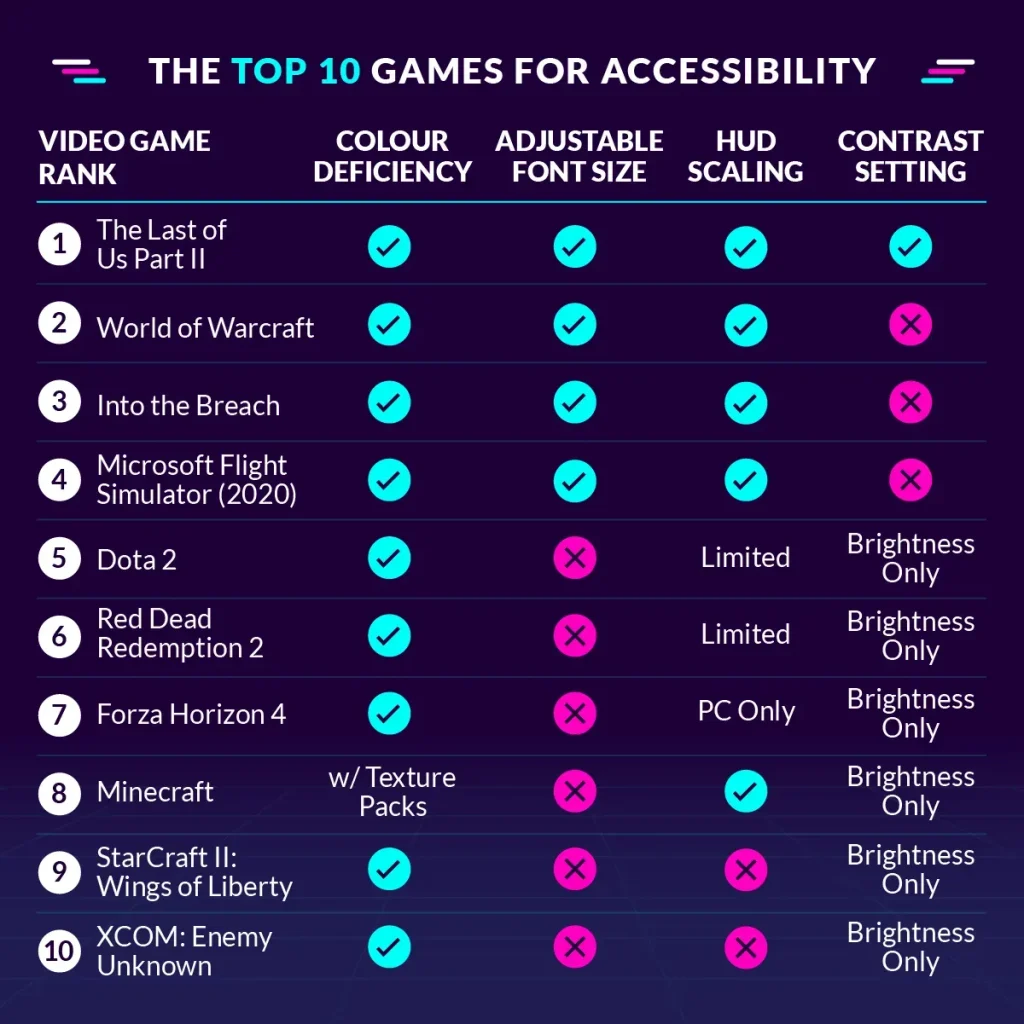
Accessibility in games matters as the industry grows into a global, diverse audience, inviting players of varying abilities to explore stories, compete, and share adventures. When developers commit to inclusive game design, they move beyond compliance to create experiences that accommodate motor, vision, hearing, and cognitive differences. Practical options like controller remapping, scalable UI, and adjustable difficulty serve as core accessibility features that empower players without diminishing challenge. As digital ecosystems evolve, designers can integrate feedback from disability communities, adopt inclusive testing, and plan accessibility checkpoints from concept through post-launch. Ultimately, accessibility should be woven into every project, ensuring broader participation and a stronger, more vibrant gaming future.
Accessibility in games: Inclusive game design, assistive technology in gaming, and how to make games accessible
Accessibility in games is both an ethical imperative and a practical business decision. When teams adopt inclusive game design from the start, they lay the groundwork for accessible video games that welcome players with motor, vision, hearing, or cognitive differences. Early planning—documenting accessibility requirements in design briefs, wireframes, and art direction—helps teams embed features across input, UI, and narrative, reducing the cost of later changes while expanding the potential audience and strengthening community engagement.
Assistive technology in gaming—screen readers, voice controls, and switch-accessible interfaces—opens titles to players who rely on alternative inputs. To maximize effectiveness, designers should avoid hard-to-parse UI, ensure focus is logical, and provide multiple navigation paths. Many teams ask how to make games accessible, and the answer lies in building flexible, modular features from the start: remappable controls, scalable UI, captioned dialogue, and descriptive audio that can be toggled without breaking immersion. This approach supports game accessibility features and helps create accessible video games that resonate with a broad audience.
Game accessibility features and accessible video games: Practical strategies for an inclusive player experience
Implementation of game accessibility features requires concrete routines. Start with a planning checklist that covers input, UI, audio, typography, and narrative accessibility; then enable user customization across a wide spectrum; finally integrate accessibility testing into QA and certification. By weaving these steps into the development lifecycle, teams ensure that game accessibility features become a core aspect of the product, delivering a better experience for players and expanding the market for accessible video games.
A robust strategy also includes diverse playtesting and ongoing post-launch feedback. Dedicated accessibility testing helps identify friction points early, while community input drives improvements that keep pace with evolving assistive technology in gaming and platform ecosystems. By documenting decisions and sharing progress, studios demonstrate real commitment to inclusive game design and accessible video games, ensuring that how to make games accessible remains an actionable, ongoing conversation with players.
Frequently Asked Questions
What are essential game accessibility features that improve accessibility in games?
Essential game accessibility features are the practical starting point for accessibility in games. They include robust input remapping, adjustable difficulty, and customizable UI to accommodate different motor abilities. Subtitles with speaker labels, high-contrast color palettes, scalable text, and dyslexia-friendly fonts support perceptual accessibility, while descriptive audio aids players with vision differences. Also ensure compatibility with assistive devices and allow timing and camera options to keep challenge intact in accessible video games.
How does inclusive game design, combined with assistive technology in gaming, support accessibility in games?
Inclusive game design is a core philosophy guiding how objectives, feedback, and progression are structured to accommodate a broad range of abilities. When paired with assistive technology in gaming—screen readers, voice controls, and switch-access interfaces—it expands who can play and participate fully. Practices include starting accessibility requirements in planning, conducting diverse playtests, and offering options across UI, input, typography, and audio. In short, these steps show how to make games accessible by building inclusive design and leveraging assistive tech to support every player.
| Aspect | Key Points | Notes / Examples |
|---|---|---|
| Rationale |
| Not merely a compliance checkbox; accessibility broadens participation and value for players and studios |
| Control & Input Customization |
| Empowers players to tailor experiences to their needs; focus on practical, inclusive design |
| Perceptual Accessibility |
| Supports vision and hearing differences; improves comprehension and world immersion |
| Inclusive Game Design |
| Facilitates easier integration and iteration; reflects real user needs from the start |
| Assistive Technology |
| Enables diverse interaction methods; reduces duplicate implementation effort |
| Industry Exemplars |
| Demonstrates practical applicability across genres; avoids one-size-fits-all templates |
| Implementation Strategies |
| Creates a living cycle of continuous improvement for players and studios |
| Communication with Players |
| Encourages discovery, learning, and informed use of features |
| Ongoing Community Dialogue |
| Fosters trust and sustained improvement across releases |
Summary
Accessibility in games is a guiding principle that shapes how all players experience stories, challenges, and communities across platforms. By embracing inclusive game design, investing in built-in accessibility features, and supporting players with assistive technologies in gaming, developers unlock a broader audience while delivering more polished, usable experiences for everyone. The most successful games are those that listen to diverse needs, adapt to varied playstyles, and continuously improve access to information, agency, and immersion. The future of gaming will be richer and more vibrant when accessibility is treated as a core value rather than an afterthought. For studios wondering how to begin, start by embedding accessibility into your design philosophy, empowering players with options, testing with diverse users, and sharing progress with the community—creating not only accessible video games but a more welcoming, inclusive industry for all.