
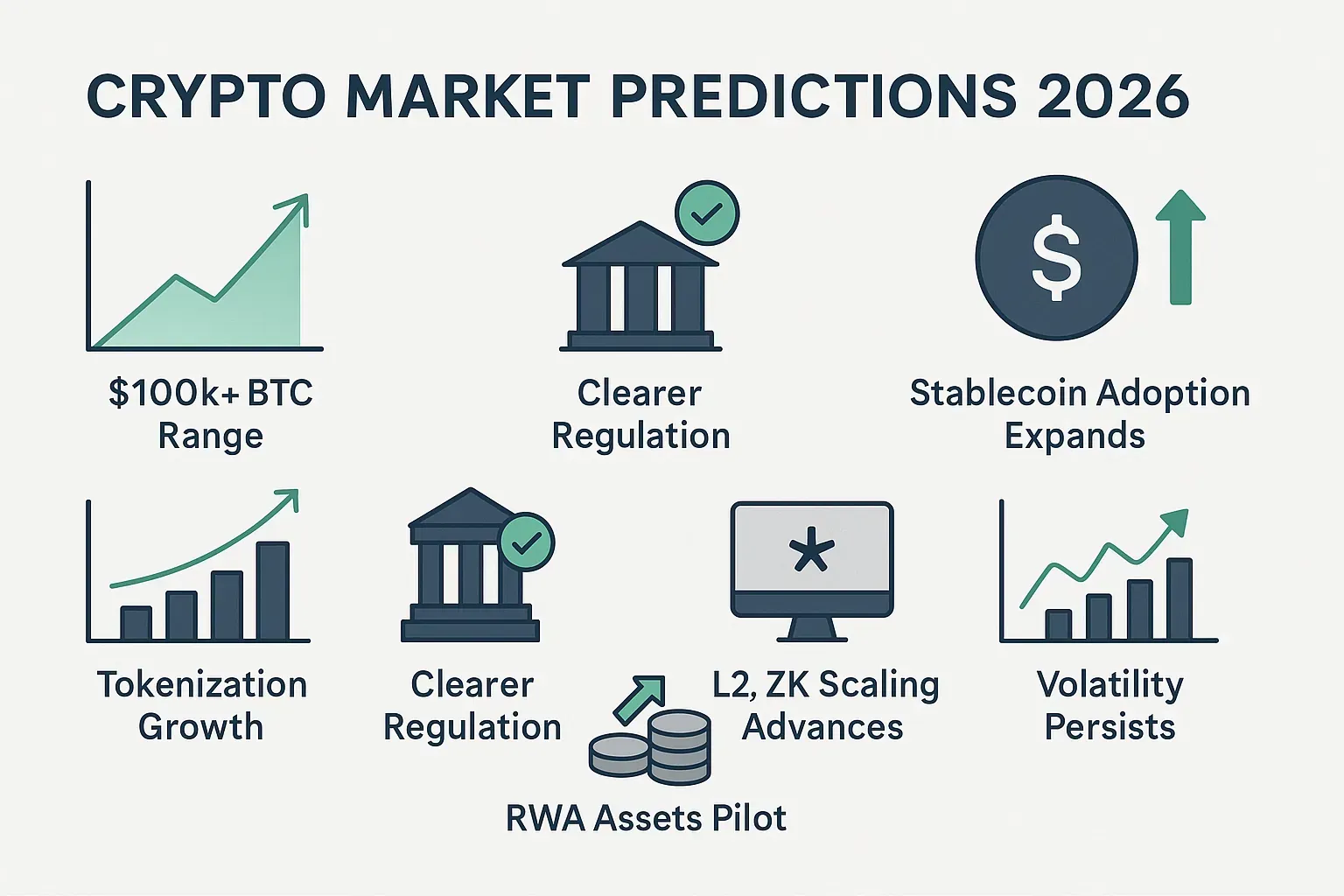
Cryptocurrency Trends 2026 heralds a shift from hype to practical utility in the digital finance landscape. As institutions, developers, and everyday users engage more deeply, DeFi growth 2026 is becoming a core driver of diversified yields, safer lending, and clearer auditing. Layer-2 scaling solutions are lowering transaction costs and speeding settlements, enabling more responsive wallets, microtransactions, and scalable app experiences. Mainstream crypto adoption is expanding through easier onboarding, intuitive wallets, and merchant integrations, supported by broader access to calibrated risk controls. This evolution is drawing in traditional finance, accelerators, and early-stage technologists to build more resilient, user-centric crypto services.
From a different angle, the trajectory points toward a more mature, utility-first ecosystem where digital assets behave like familiar financial tools. The story emphasizes interoperability, cross-chain messaging, and governance-ready protocols that reduce frictions between networks and applications. Second-layer technologies and robust custody options help institutions and consumers participate with greater confidence and predictability. In practical terms, this means faster payments, clearer risk management, and scalable infrastructure that supports both personal finance needs and enterprise use cases.
Cryptocurrency Trends 2026: DeFi Growth, Layer-2 Scaling, and Mainstream Adoption
Cryptocurrency Trends 2026 underscores a maturation of DeFi beyond experiments into risk-managed, interoperable ecosystems. DeFi growth 2026 is driven by standardized audits, governance improvements, and more accessible liquidity across decentralized exchanges, lending pools, and synthetic assets. Investors and users are wiring capital into more reliable yields, safer lending protocols, and clear auditing trails, signaling that DeFi is becoming a mainstream financial tool and a driver of mainstream crypto adoption.
Layer-2 scaling solutions are central to 2026's crypto strategy. Layer-2 networks, including rollups and state channels, reduce transaction costs and increase throughput without compromising the security of the underlying chain. In Cryptocurrency Trends 2026, the emphasis is on user experience: faster transactions, cheaper fees, and more reliable confirmations that make crypto feel as seamless as mainstream payment apps. Layer-2 scaling solutions enable microtransactions, scalable NFT markets, and improved cross-chain interactions that were bottlenecks. The adoption of ZK-rollups and Optimistic rollups, along with evolving bridging technologies, is reshaping how developers design dApps and how users interact with them. This shift is a key driver of platform viability and user confidence as it directly addresses one of the oldest criticisms of crypto—cost and speed. These innovations contribute to blockchain scalability improvements across networks.
Institutional Investment, Regulation, and the Road to Mainstream Crypto Adoption
Institutional investment in crypto is expanding in tandem with improved risk management, regulated custody, and standardized reporting. Institutions are seeking transparent risk disclosures, compliant investment vehicles, and scalable liquidity that can be integrated into existing portfolios. As more institutions participate, liquidity increases, which supports more stable pricing and deeper market resilience.
Regulatory clarity is increasingly central to crypto strategy, reducing uncertainty for businesses and investors while safeguarding consumers. Clear guidelines encourage responsible product design, robust risk controls, and compliant banking relationships, helping mainstream crypto adoption reach more wallets, merchants, and institutions. With clearer rules in place, participants can pursue innovative use cases across DeFi, Layer-2 deployments, and interoperable networks with greater confidence.
Frequently Asked Questions
In Cryptocurrency Trends 2026, how does DeFi growth 2026 influence mainstream crypto adoption?
DeFi growth 2026 indicates a matured DeFi ecosystem with improved risk management, governance, and diversified liquidity. It tends to offer more reliable yields, safer lending, and clearer auditing, turning DeFi into a practical component of personal and institutional finance. Paired with Layer-2 scaling solutions that lower fees and speed up transactions, the user experience approaches that of mainstream payment apps. As onboarding improves, mainstream crypto adoption accelerates, with wallets, merchants, and consumer apps integrating DeFi-enabled services as standard options.
How do Layer-2 scaling solutions and blockchain scalability improvements affect institutional investment in crypto under Cryptocurrency Trends 2026?
Layer-2 scaling solutions reduce transaction costs and increase throughput, powering faster, cheaper crypto usage at scale. Blockchain scalability improvements and cross-chain interoperability enable institutions to access diversified liquidity and multi-network services while maintaining security and compliance. The combination supports institutional-grade custody, transparent risk frameworks, and regulated product availability, inviting more institutional investment in crypto as part of diversified portfolios, in line with Cryptocurrency Trends 2026.
| Aspect | Key Points | Notes / Implications |
|---|---|---|
| Introduction | Context and overall trend | Crypto Trends 2026 marks a shift from hype to tangible change, with focus on DeFi growth, Layer-2, and mainstream adoption. |
| DeFi growth in 2026 | Mature DeFi with governance and risk controls | DeFi products aim for reliable yields, safer lending, auditing trails; liquidity diversified across DEXs, lending pools, and synthetic assets; capital-efficient mechanisms like concentrated liquidity; standardized audits and interoperable interfaces ease onboarding. |
| Layer-2 scaling solutions | Layer-2 as a central pillar | Rollups and state channels cut costs and boost throughput while preserving base-chain security; focus on user experience: faster transactions, cheaper fees, reliable confirmations; enables microtransactions, scalable NFT markets, cross-chain interactions; adoption of ZK-rollups and Optimistic rollups; improving bridging tech shapes dApp design. |
| Mainstream adoption | Onboarding to adoption | Easier onboarding, intuitive wallets, and crypto payments in everyday commerce drive mainstream use; merchants and consumer fintech apps offer crypto features as savings, investments, and remittance services; emphasis on user-friendly interfaces and robust support to reduce friction. |
| Blockchain scalability & interoperability | Interoperability remains a focus | Improvements in cross-chain messaging and standardized data access enable multi-chain dApps; shared liquidity/assets across networks; scalable systems with strong security/finality; supports new business models and reliable user services. |
| Institutional investment & risk management | Institutional interest grows | Demand for diversification, hedging, and regulated products; transparent risk frameworks and custody solutions; liquidity growth supports stability; more audited reporting helps financial teams manage exposure. |
| Regulatory considerations & consumer protection | Regulation and protection | Clear guidelines reduce uncertainty and enable responsible innovation; balance safeguarding users with open, permissionless innovation; platforms should offer risk disclosures, security practices, and protections. |
| What this means for users and developers | Impact on users and developers | For users: easier access, lower costs, safer holdings; for developers: secure, scalable, interoperable architecture; governance and standardized protocols shorten development cycles and increase trust. |
| Practical steps to participate in Cryptocurrency Trends 2026 | Actionable steps | - Learn about Layer-2 networks and use wallets that support them to reduce fees and improve speed. - Explore reputable DeFi protocols with audits and strong risk controls. - Stay informed on regional regulatory developments and how they affect holdings. - Consider cross-chain opportunities for liquidity with strong security. - Prioritize security: hardware wallets for long-term holdings, MFA, and key backups. |
Summary
Conclusion: Cryptocurrency Trends 2026 reflects a maturation of the crypto ecosystem, with DeFi growth, Layer-2 scaling, and broader mainstream adoption driving practical use and institutional participation. The shift from hype to tangible infrastructure is enabling more reliable yields, faster transactions, and accessible products that fit into everyday financial life. Interoperability and standardized protocols empower multi-chain applications, while clearer risk management and regulatory clarity support responsible growth. As institutions, developers, and users align on safer practices, Cryptocurrency Trends 2026 points to a more inclusive, resilient, and scalable digital economy for 2026 and beyond.