
When a recent headline declared, 'The thought of living to 100 terrifies me,' it struck a nerve. For many, the fear isn't just about aging; it's about whether the money will be there. That anxiety has fueled a persistent question: Is Social Security a giant Ponzi scheme? It's a provocative claim, often tossed around in political debates and coffee shop conversations. But is there any truth to it? Let's dig into the mechanics, the demographics, and the emotions behind this debate.
The Ponzi Scheme Analogy: What It Gets Right and Wrong
A Ponzi scheme, named after Charles Ponzi, is a fraudulent investment operation that pays returns to earlier investors using the capital from newer investors, rather than from profit earned. It collapses when new investments dry up. Social Security, on the surface, shares a key feature: current workers' payroll taxes fund current retirees' benefits. This pay-as-you-go structure is the basis for the comparison.
However, the differences are stark. Social Security is a government program backed by law, not a private scheme. It has the power to tax, adjust benefits, and borrow. It's also transparent: its finances are publicly scrutinized by the Social Security Trustees, who release an annual report. A Ponzi scheme relies on secrecy and deception; Social Security operates in the open. Still, the analogy persists because both depend on a growing pool of contributors. And that's where demographics come in.
The Demographic Squeeze: A 'Run' on Social Security?
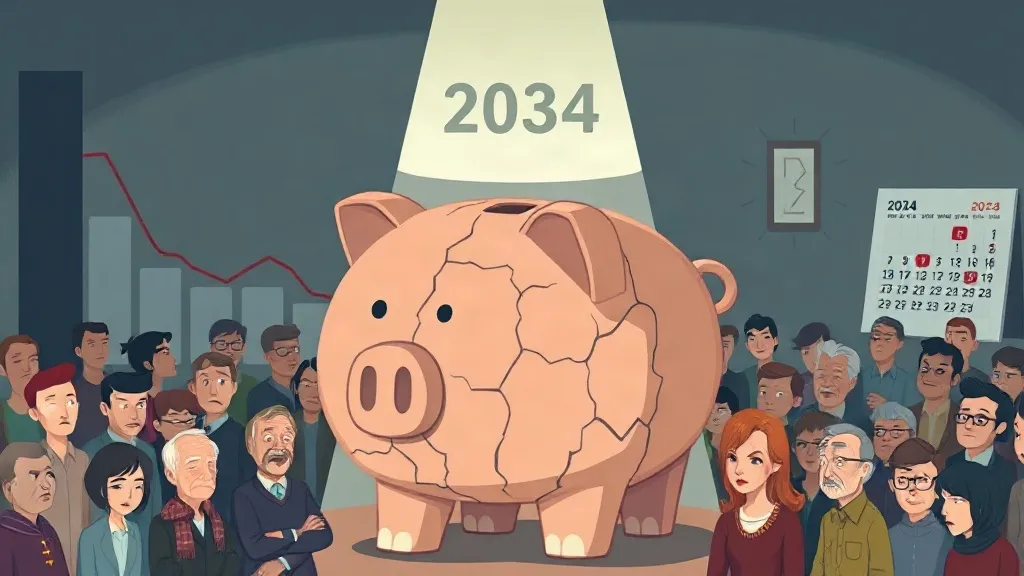
There's a demographic 'run' on Social Security, and it's not a fictional scenario. The ratio of workers to beneficiaries has been shrinking for decades. In 1950, there were about 16 workers for every beneficiary. Today, that ratio is roughly 3 to 1, and it's projected to drop to 2 to 1 by 2040. This is due to lower birth rates and longer life expectancies. The program's trust fund is projected to be depleted by 2034, after which incoming taxes would only cover about 77% of scheduled benefits. That's a scary number for anyone planning their retirement.
But here's the thing: a Ponzi scheme would have already collapsed. Social Security has been 'going broke' for decades, yet it has never missed a payment. The trustees' reports have repeatedly prompted Congress to make adjustments, such as raising the payroll tax rate and the full retirement age. The system is designed to be self-correcting, albeit with political pain.
Why the Fear Resonates
The fear of living to 100 isn't just about outliving your savings; it's about outliving the system. For younger generations, the worry is that they'll pay into a system that won't be there for them. This intergenerational tension is real. A 2023 survey by the Nationwide Retirement Institute found that 44% of adults believe Social Security will run out of money in their lifetime. That belief can shape behavior: some may save more, others may save less, assuming the government will bail them out.
But the emotional appeal of the Ponzi label is understandable. It's a simple way to express a complex fear: that the math doesn't add up, and that promises made today can't be kept tomorrow. However, labeling it a Ponzi scheme oversimplifies the issue and ignores the program's history of adaptation.
The Political Football
Social Security is often called the 'third rail' of politics: touch it and you die. But the debate over its future is unavoidable. Proposed solutions range from raising the payroll tax cap (currently at $168,600 in 2024) to means-testing benefits to increasing the retirement age. Each option has winners and losers. The Ponzi scheme label is sometimes used by those who want to privatize the system or drastically cut it. But it's also used by those who simply want to highlight the urgency of reform.
What's lost in the noise is that Social Security is more than a retirement program. It's a safety net that keeps millions of elderly Americans out of poverty. In 2022, it lifted 22 million people out of poverty, including 1 million children. Any reform must balance fiscal sustainability with social responsibility.
What Can You Do?
If you're worried about Social Security's future, here's what you can do:
- Stay informed: Read the annual Social Security Trustees Report to understand the latest projections.
- Plan for a gap: Assume you'll receive only 70-80% of your scheduled benefits and save accordingly.
- Diversify your retirement income: Don't rely solely on Social Security. Consider personal savings, pensions, and part-time work.
- Advocate for reform: Contact your representatives and support balanced solutions.
Ultimately, the question 'Is Social Security a giant Ponzi scheme?' is less about legal definitions and more about trust. The program has been a cornerstone of American retirement for nearly 90 years. Its future depends on political will and demographic realities. While the Ponzi analogy may be a useful rhetorical tool, it's not a substitute for serious policy discussion.
Frequently Asked Questions
Is Social Security legally a Ponzi scheme?
No. A Ponzi scheme is an illegal investment fraud that relies on new investors to pay earlier ones, with no legitimate underlying business. Social Security is a government social insurance program authorized by law, with transparent finances and the ability to adjust taxes and benefits.
Will Social Security run out of money?
The trust fund is projected to be depleted by 2034, but that doesn't mean the program will end. After that, incoming payroll taxes would cover about 77% of benefits. Congress can take steps to shore up the system, as it has in the past.
Why do people call Social Security a Ponzi scheme?
Because it operates on a pay-as-you-go basis, where current workers fund current retirees. This structure, combined with demographic pressures, leads some to compare it to a Ponzi scheme. However, the comparison ignores the program's legal framework and history of reform.
How can I prepare for potential Social Security shortfalls?
Save more, diversify your retirement income, and consider delaying claiming benefits to increase your monthly amount. Stay informed about policy changes and plan for a range of scenarios.
What is the demographic 'run' on Social Security?
It refers to the shrinking ratio of workers to beneficiaries as the population ages. With fewer workers supporting more retirees, the system faces financial strain. This demographic shift is a key challenge for Social Security's long-term solvency.