
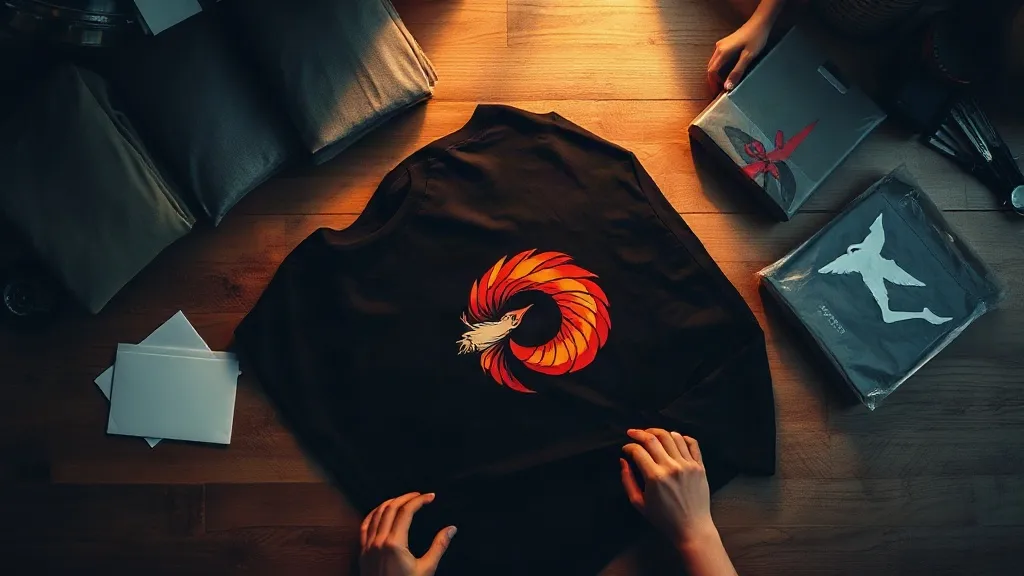
Most print shops obsess over the press temperature and the peel. Fair enough, because dtf transfers live or die by those settings. But after a few hundred orders, you start noticing something else: the shops that grow are rarely the ones with the fanciest printer. They are the ones whose customers keep coming back, and the reason usually has nothing to do with ink.
This guide is about that second half of the job. The emails, the proof, the poly bag, the care card, the way you answer a complaint on a Tuesday morning. None of it is glamorous, and almost none of it costs much. All of it decides whether your dtf business has a future or just a busy month.
Start With a Proof Nobody Has to Decode
A customer who sends you a phone photo of a logo is not trying to make your life hard. They just do not know what a vector file is. Your job is to make the gap between their file and your print as small as possible before the press heats up.
What works in practice is a simple three-part proof: the mockup on the actual garment color, the print size in inches, and a one-line note about anything you changed. If you cleaned up a jagged edge or swapped a near-black for true black, say so. Customers forgive adjustments they can see. They do not forgive surprises they find after washing.
Show the shirt, not just the artwork
A design that glows on a white background can go muddy on a heather grey tee. When you send a proof, drop the artwork onto a photo of the blank the customer actually ordered. It takes a minute in any design tool and prevents the most common complaint in custom apparel: "It looked different online."
Ask about small text before you print it
Thin serif fonts and tiny taglines are where dtf prints get judged. A 6pt script name on a left chest print can fill in and turn into a smudge. If a customer sends artwork with text under about 8pt, flag it and offer a larger size or a simplified version. They will thank you later, and you will not be reprinting on your own dime.
Set Timelines You Can Actually Beat
Every shop has that week where three orders land at once and the printer decides to act up. Promising a five-day turnaround and delivering in six feels like a failure to the customer. Promising seven and delivering in five feels like a gift. Same work, completely different experience.
Build your quoted timeline around your worst realistic week, not your best one. Then add a small buffer for shipping. If you use a gangsheet workflow, batch similar orders together and tell customers when their job is scheduled to run. People are remarkably patient when they know where they sit in the queue.
- Quote business days, not calendar days, and say so clearly.
- Send a short "your order is on the press" note when the job actually starts.
- If something slips, tell the customer before they have to ask.
The Unboxing Is Part of the Product
Here is a small experiment worth running. Order a shirt from three different custom apparel shops and film yourself opening each package. You will notice immediately which ones feel like a business and which ones feel like a favor. The difference is usually a printed insert, a folded shirt, and a bag that is not half open.
You do not need branded tissue paper. A clean poly bag, a shirt folded with the print facing up, and a small card with wash instructions will do more for repeat orders than a discount code. Customers keep care cards. They pin them to the fridge, and your shop name stays in the house long after the order is done.
What to put on the care card
Keep it to four lines: wash inside out, cold water, no fabric softener on the print, and tumble low or hang dry. Those four rules cover most of the wear issues that lead to complaints. If a customer follows them and the print still fails, you know it was your problem, and you can fix it without an argument.
Handle Problems Like a Human
Sooner or later a print will crack, a size will be wrong, or a package will vanish. How you respond in that first message decides whether you keep the customer. The shops that do this well follow a pattern that is almost boring in its consistency.
- Acknowledge the problem in the first sentence, without excuses.
- Ask for one photo, not a five-step interrogation.
- Offer a fix (reprint, refund, or credit) within one reply.
- Follow up after the fix lands.
That last step is the one most shops skip. A short "did the replacement arrive okay?" email costs nothing and often produces a review you would otherwise never get. People remember who checked back.
Make It Easy for Customers to Find You Again
Repeat business is the cheapest marketing there is, but only if people can find you. Plenty of shoppers search dtf transfers near me months after their first order, having forgotten the shop name. If your packaging, your invoice, and your social profile all carry the same name and a clear way to reorder, you catch that search instead of losing it.
Two practical habits help. First, put your shop name and website on the care card and the outside of the mailer, not just the invoice inside. Second, keep a simple reorder path: a saved gangsheet layout, a customer note with their preferred blank and size, or a short form that says "same as last time." Loyalty is mostly convenience in disguise.
Track the Numbers That Predict Repeat Orders
Revenue tells you what happened last month. A few smaller numbers tell you what is coming. Watch your reprint rate, your average reply time on customer emails, and the share of orders that come from returning buyers. If the reprint rate creeps up, check your press settings and your blank supplier before blaming the film. If reply time stretches past a day, your customer experience is quietly eroding.
None of these metrics require expensive software. A simple spreadsheet updated weekly will show you the trend within a month or two. The point is not to build a dashboard. It is to notice a slide before it becomes a reputation.
Frequently Asked Questions
How long should a DTF print last with normal washing?
With a proper press and a quality film, most prints hold up well past 30 washes when washed inside out in cold water and dried on low or hung to dry. Hot water, high dryer heat, and fabric softener are the three fastest ways to shorten that life.
Should I send a proof for every order, even small ones?
Yes, even for a single shirt. A quick mockup on the actual garment color takes a minute and prevents most size and color complaints. For repeat customers with saved artwork, a short confirmation message can replace the full proof.
What is the best way to package custom shirts for shipping?
Fold the shirt with the print facing up, place it in a clean poly bag, and add a care card. Avoid tight vacuum packing on freshly pressed prints, since the film needs to cool and settle. A rigid mailer or a padded bag protects the print from creasing in transit.
How do I get more repeat orders from my print shop?
Make reordering effortless. Keep customer artwork and blank preferences on file, put your shop name on the packaging, and follow up after a fix or a large order. Most repeat business comes from customers who already trust you and simply need a reminder that you exist.