
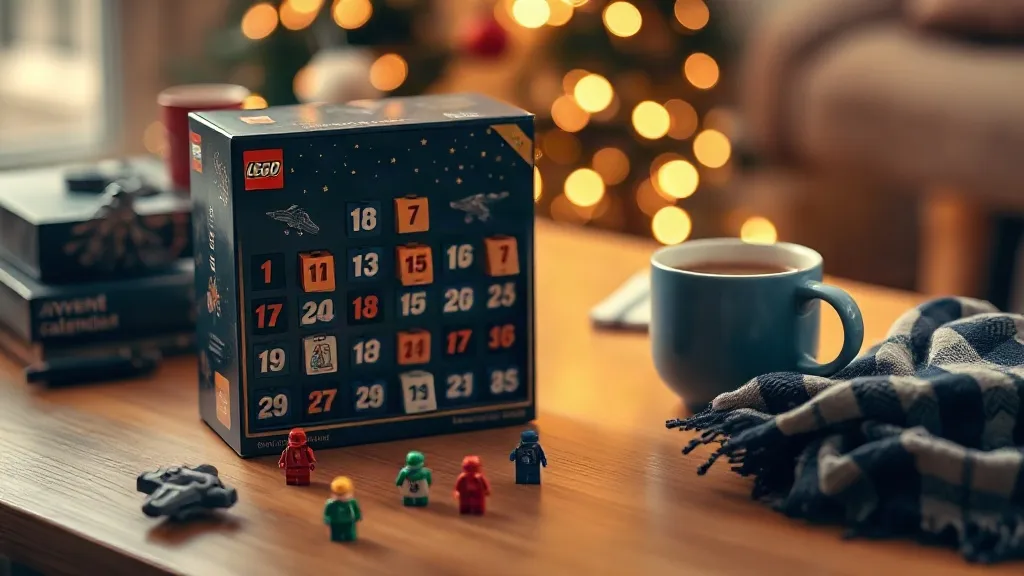
Every November the same small drama plays out among LEGO collectors: the advent calendars go live, everyone says they will wait for a Black Friday price cut, and then the most popular box quietly vanishes from the biggest retailers. This year the disappearing act started earlier than usual, and the set at the center of it is the 2026 LEGO Star Wars Advent Calendar. Amazon has run out. The official LEGO Store has run out. Best Buy has run out. Target, for now, is still shipping it, and it is doing so below the sticker price.
That combination, scarce stock plus an actual discount, is rare enough in the LEGO world that it is worth slowing down to understand. If you have been circling this set, the window is narrow, but the story behind the shortage is more interesting than a single deal alert.
Where the 2026 Star Wars Advent Calendar Still Lives
The short version is that availability has split into two tiers: retailers that still have the set at a fair price, and everyone else. Target sits alone in the first tier right now, offering the calendar at a discount rather than the full retail figure. Barnes & Noble and Macy's still list it at the standard $44.99, which is the normal price you would expect to pay for a licensed LEGO advent calendar of this size. Walmart has stock showing through a third-party seller at roughly $52, which means you are paying a markup for the privilege of not shopping elsewhere.
That spread tells you almost everything about the current market. When a set is genuinely available, prices cluster. When it is scarce, the gap between the cheapest legitimate listing and the most expensive reseller listing widens fast. Right now that gap runs from a discounted Target price up to about $52 through a marketplace seller, and it will only stretch further once Target's own inventory clears.
Why Barnes & Noble and Macy's Matter Later
There is a practical lesson buried in this stock update. Barnes & Noble and Macy's have quietly become reliable fallback stops for LEGO sets that have already sold through at Amazon and the brand's own store. They rarely discount, but they also rarely gouge, and they tend to hold inventory a little longer because shoppers do not think of them first. If Target sells out before you get there, those two are the next sensible places to look before you resort to a marketplace listing with a padded price.
The Real Reason These Calendars Sell Out So Early
An advent calendar is a strange product when you think about it. It has a hard expiration date built into its name. Nobody wants a countdown calendar on December 15, which means demand is compressed into a few weeks and then falls off a cliff. Retailers know this, so they order conservatively, and collectors know retailers order conservatively, so they buy early. The result is a feedback loop that turns a $45 seasonal set into a mild panic every autumn.
The Star Wars calendar sits at the sharp end of that loop because it has the broadest appeal of any licensed advent calendar LEGO makes. It is not just for children working through a December morning ritual. Adult fans buy it for the minifigures, which in recent years have included holiday-themed variants that never appear in standard sets. A festive trooper or a snow-dusted droid is a genuine collectible, and collectors who miss one tend to feel it for years. That dual audience, kids plus completionist adults, is what drains shelves while other calendars are still sitting comfortably in stock.
What Makes This Year's Timing Different
The sellout has landed ahead of Black Friday rather than during it, which changes the calculus for anyone hoping to save money. Normally the advice is straightforward: wait for the promotional window and buy then. This year the promotional window is arriving after the stock has already thinned at the major online retailers, so waiting carries a real risk of paying more, not less. The discount at Target is effectively the Black Friday deal showing up early, attached to a set that may not survive until the actual event.
Should You Buy Now or Hold Out?
The honest answer depends on why you want the calendar. If you are buying it to actually open, day by day, through December, then the decision is easy. A countdown calendar has no value to you after the countdown starts, and paying a reseller markup in mid-December to salvage a tradition is a worse outcome than buying now at a discount. The set is designed to be used on a schedule, and that schedule does not wait for a better price.
If you are buying it as a gift, the same logic mostly applies, with one addition: shipping times get unpredictable as the holidays close in, and a calendar that arrives late is a calendar that has already failed at its only job.
If you are a collector chasing the minifigures, the calculation is different and more cold-blooded. Ask yourself what the figures are worth to you individually. If the answer is less than the current discounted price, skip it. If a single exclusive figure would bother you to miss, buy now, because the aftermarket for advent calendar minifigures is notoriously unkind once the boxes are gone.
A Quick Checklist Before You Check Out
- Confirm the listing is sold and shipped by the retailer itself, not a marketplace third party wearing the retailer's logo.
- Check the price against the $44.99 standard retail figure so you know whether you are getting a deal or a markup.
- Verify the year on the box, since older advent calendars linger in search results and get confused with the current release.
- Order early enough that delivery lands before December 1, which is the only deadline that truly matters here.
The Bigger Picture for LEGO Holiday Shopping
This small stock saga is a useful preview of the wider LEGO holiday season. Licensed advent calendars are usually the first category to sell through, followed by the large flagship sets that collectors save for. When the cheapest, most giftable items disappear first, it signals that shoppers are front-loading their purchases rather than waiting for doorbuster events. That behavior tends to repeat across the whole catalogue, which is why the sensible approach for any specific set you have your eye on is to track it at multiple retailers rather than assume a discount will arrive on schedule.
For now, the Star Wars calendar remains obtainable at a fair price from one major retailer. That is a better position than it was in a week ago for the set's fans, and a worse one than it will be in a week if the current pace holds. Either way, the 2026 edition has already written its own small chapter in the annual ritual of holiday LEGO hunting: the year the calendar sold out before the sales even started.
Frequently Asked Questions
Is the 2026 LEGO Star Wars Advent Calendar still in stock anywhere?
Target is currently the strongest option, since it still has the set available and is offering it at a discount. Barnes & Noble and Macy's also list it at the standard $44.99 price. Amazon, the official LEGO Store and Best Buy have all sold out, and Walmart availability is coming through a third-party seller at a higher price.
Why is the Star Wars advent calendar selling out before Black Friday?
Advent calendars have a hard use-by date, so demand is squeezed into a few weeks and retailers order carefully. The Star Wars version attracts both children and adult collectors hunting exclusive holiday minifigures, which makes it the fastest of the LEGO advent calendars to clear shelves each year.
What is a fair price for this calendar?
The standard retail price is $44.99. Anything below that is a genuine discount, and anything meaningfully above it is a reseller markup. Listings around $52 are already carrying a premium, so compare carefully before buying.
Should I wait for a deeper Black Friday discount?
Waiting is risky this year because stock at the biggest retailers has already thinned ahead of the promotional period. A deeper cut is possible, but so is a sold-out set and a higher reseller price. If you plan to actually use the calendar in December, buying at the current discount is the safer choice.
Are the minifigures inside worth buying the calendar for?
For many collectors, yes. Advent calendars have historically included festive variants that do not appear in regular sets, and those figures hold appeal on the aftermarket. If a specific exclusive figure matters to you, treat the calendar as a limited purchase rather than a wait-and-see item.